
Free Donation Pickups for Craft Supplies, Art Materials and More
DonateYourStuff.ca offers free scheduled pickup for qualifying art, craft and sewing supply donations across the GTA and select surrounding communities. We accept yarn, fabric, thread, sewing notions, knitting and crochet supplies, art materials, complete craft kits and portable sewing machines that work properly.
Supplies must be clean, dry, organized and ready to be used again. Submit a pickup request with your location, photos or a clear list of what you have, and the approximate quantity. We will review your request and contact you by email about pickup availability.
Art, Craft & Sewing Supply Donations We Accept
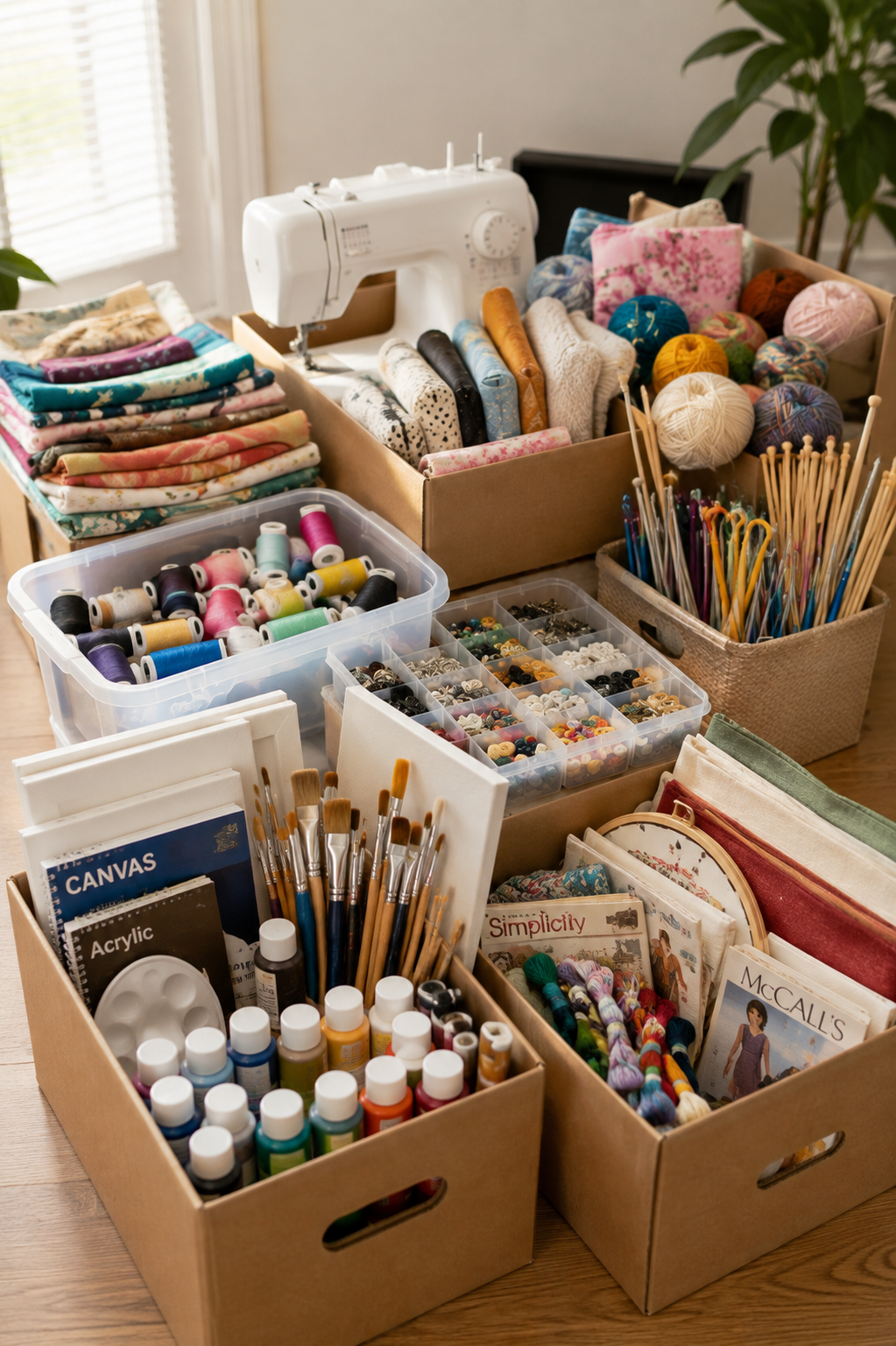
Art, craft and sewing donations can include many different types of materials, tools, kits and equipment. To make the information easier to review, the sections below organize everything by category instead of treating all creative supplies the same.
Find the category that matches what you want to donate. Each section explains what may qualify and any specific details you should check before including those items in your pickup request..
Why Condition Matters
Art, craft and sewing supplies can only continue to be used when they are clean, dry, organized and in usable condition.
Yarn should not be tangled, damp or affected by pests. Fabric should be clean and free from mould, strong odours and heavy staining.
Sewing machines must turn on and perform their main functions properly. Required cords, foot pedals, bobbin cases and other essential parts should be included.
Paints must be sealed, clearly identified and free from leaks or damaged containers.
We reserve the right to decline supplies at pickup if they are contaminated, unusable, heavily damaged, incomplete, nonworking, leaking or improperly packed.
Yarn
We accept qualifying:
- Full skeins of yarn
- Partial skeins in usable quantities
- Wool yarn
- Cotton yarn
- Acrylic yarn
- Blended yarn
- Chunky yarn
- Fine yarn
- Sock yarn
- Baby yarn
- Blanket yarn
- Crochet thread
- Embroidery yarn
- Rug yarn
- Specialty yarn
- Yarn sets
- Matching dye-lot yarn
- Yarn stored in clean containers
Yarn should be clean, dry and free from mould, mildew, pests, pet hair and strong odours.
Keep loose yarn secured so it does not become tangled during transportation.
Place partial skeins inside sealed bags or containers. Include the original label whenever it is still available.
Do not mix damaged, damp or badly tangled yarn with supplies prepared for donation.
Knitting Supplies
We accept qualifying:
- Straight knitting needles
- Circular knitting needles
- Double-pointed knitting needles
- Interchangeable knitting-needle sets
- Cable needles
- Stitch holders
- Stitch markers
- Row counters
- Needle gauges
- Knitting looms
- Pom-pom makers
- Yarn winders of manageable size
- Swift-style yarn holders of manageable size
- Knitting patterns
- Knitting books
- Project bags
- Needle cases
- Complete knitting kits
- Other reusable knitting accessories
Knitting needles should be straight, smooth and free from heavy rust, cracks or broken tips.
Keep interchangeable needles, cables, connectors and tightening tools together.
Place small stitch markers, counters and other accessories inside sealed bags or divided containers.
Keep patterns and instructions with the correct kits whenever possible.
Crochet Supplies
We accept qualifying:
- Crochet hooks
- Crochet-hook sets
- Steel crochet hooks
- Ergonomic crochet hooks
- Tunisian crochet hooks
- Stitch markers
- Row counters
- Blocking pins
- Blocking mats in clean condition
- Yarn needles
- Crochet patterns
- Crochet books
- Project bags
- Hook cases
- Complete crochet kits
- Other reusable crochet accessories
Crochet hooks should be clean, straight and free from broken tips or damaged handles.
Keep hook sets together inside their original case or another secure container.
Place stitch markers, yarn needles and other small pieces inside sealed bags or organizers.
Fabric
We accept qualifying:
- Cotton fabric
- Quilting cotton
- Flannel
- Fleece
- Denim
- Linen
- Wool fabric
- Felt
- Canvas fabric
- Upholstery fabric in manageable amounts
- Fashion fabric
- Costume fabric
- Drapery fabric
- Craft fabric
- Fabric panels
- Fat quarters
- Fabric bundles
- Fabric remnants in usable sizes
- Unused fabric yardage
- Coordinated fabric sets
Fabric should be clean, dry and free from mould, mildew, pests, pet hair, heavy staining and strong smoke or chemical odours.
Fold fabric neatly or place it inside clean, sealed bags or storage containers.
Separate very small scraps from usable fabric. Bags containing mostly tiny offcuts, unusable scraps or tangled material may be declined.
Label fabric by type or approximate size whenever possible.
Quilting Supplies
We accept qualifying:
- Quilting fabric
- Fat quarters
- Fabric bundles
- Quilt blocks
- Unfinished quilt tops
- Clean batting
- Quilt backing fabric
- Binding material
- Quilting rulers
- Quilting templates
- Rotary-cutting mats in usable condition
- Quilting clips
- Hand-quilting needles
- Quilting thread
- Quilting patterns
- Quilting books
- Complete quilting kits
- Other reusable quilting materials
Fabric, batting and unfinished projects should be clean, dry and protected from dust and moisture.
Keep quilt blocks, coordinated fabric and project instructions together whenever possible.
Rulers and templates should be free from major cracks or damage that prevents accurate use.
Pack needles and sharp quilting tools securely and label the container.
Thread
We accept qualifying:
- Sewing thread
- Quilting thread
- Embroidery thread
- Embroidery floss
- Serger thread
- Upholstery thread
- Heavy-duty thread
- Hand-sewing thread
- Metallic thread
- Elastic thread
- Bobbins with usable thread
- Thread sets
- Spools stored in organizers
- Cones of thread
- Other reusable sewing thread
Thread should be clean, dry and usable.
Keep loose spools and bobbins inside closed boxes, trays or organizers so they do not unwind during transportation.
Separate badly tangled, brittle, damp or contaminated thread from usable supplies.
Sewing Notions
We accept qualifying:
- Buttons
- Snaps
- Hooks and eyes
- Zippers
- Elastic
- Velcro-style fasteners
- Bias tape
- Seam binding
- Piping
- Ribbon
- Trim
- Lace
- Cording
- Interfacing
- Hem tape
- Fabric patches
- Appliqués
- Clothing labels
- Buckles
- Clasps
- Fasteners
- Dressmaking chalk
- Tracing wheels
- Measuring tapes
- Seam gauges
- Thimbles
- Pin cushions
- Other reusable sewing notions
Notions should be organized by type whenever possible.
Place buttons, snaps, hooks, buckles and other small pieces inside sealed bags, divided organizers or secure containers.
Keep zippers, ribbons, trim and elastic rolled or bundled so they do not become tangled.
Hand-Sewing Supplies
We accept qualifying:
- Hand-sewing needles
- Embroidery needles
- Tapestry needles
- Darning needles
- Quilting needles
- Needle sets
- Straight pins
- Safety pins
- Sewing clips
- Pin cushions
- Thimbles
- Seam rippers
- Needle threaders
- Tailor’s chalk
- Marking pencils
- Measuring tapes
- Small sewing scissors in usable condition
- Hand-sewing kits
- Mending kits
- Other reusable hand-sewing tools
Needles, pins and other sharp supplies must be stored inside secure cases, pin cushions or rigid containers.
Do not place loose needles, pins or sharp tools inside bags or open boxes.
Clearly label every container holding sharp sewing supplies.
Sewing Machines & Sergers
We accept qualifying portable machines in working condition, including:
- Standard sewing machines
- Mechanical sewing machines
- Electronic sewing machines
- Computerized sewing machines
- Portable sergers
- Overlock machines
- Small embroidery machines
- Children’s sewing machines that work properly
- Portable machine cases
- Sewing-machine covers
- Compatible foot pedals
- Compatible power cords
- Machine accessories
- Instruction manuals
Every machine must turn on and perform its main sewing functions properly.
Check the power cord, plug, foot pedal, switches, controls, presser-foot mechanism, needle plate, bobbin area and handwheel.
Include the compatible power cord and foot pedal. Keep the bobbin case, presser feet, extension table and other essential accessories with the correct machine.
We cannot accept machines with exposed wiring, damaged plugs, broken controls, missing essential parts or mechanical problems that prevent normal use.
Machines built into heavy cabinets or tables and industrial sewing equipment cannot be accepted through regular pickup.
Sewing Machine Accessories
We accept qualifying:
- Presser feet
- Bobbins
- Bobbin cases
- Needle plates
- Spool holders
- Extension tables
- Machine needles
- Walking feet
- Zipper feet
- Buttonhole feet
- Quilting feet
- Ruffler attachments
- Edge guides
- Cleaning brushes
- Machine tools
- Carrying cases
- Dust covers
- Instruction manuals
- Compatible power cords
- Compatible foot pedals
- Other clearly identified machine accessories
Keep accessories with the machine they belong to whenever possible.
If accessories are donated separately, label the brand, model or machine type when known.
Place small machine parts inside sealed bags, divided organizers or labelled containers.
Sewing Kits & Project Supplies
We accept qualifying:
- Complete sewing kits
- Mending kits
- Beginner sewing kits
- Embroidery kits
- Cross-stitch kits
- Needlepoint kits
- Quilting kits
- Felt craft kits
- Doll-making kits
- Costume-making kits
- Pattern-and-fabric sets
- Unfinished sewing projects with instructions
- Other organized sewing projects
Kits should include the main materials, instructions and essential tools needed to complete the project.
Keep fabric, thread, patterns, templates and accessories from the same project together.
Partially started kits may qualify when the remaining materials are organized and the project can still reasonably be completed.
Sewing Patterns & Books
We accept qualifying:
- Commercial sewing patterns
- Vintage sewing patterns
- Clothing patterns
- Costume patterns
- Children’s clothing patterns
- Home-décor patterns
- Bag and accessory patterns
- Quilt patterns
- Embroidery patterns
- Cross-stitch patterns
- Knitting patterns
- Crochet patterns
- Sewing books
- Quilting books
- Knitting and crochet books
- Craft books
- Pattern-storage boxes
Patterns and books should be clean, dry and free from mould, water damage and missing pages.
Keep pattern pieces inside the correct envelope whenever possible.
Label loose pattern pieces and instructions clearly.
Drawing & Colouring Supplies
We accept qualifying:
- Coloured pencils
- Drawing pencils
- Charcoal pencils
- Pastels
- Oil pastels in usable condition
- Crayons
- Markers that have not dried out
- Fine-tip pens
- Brush pens
- Calligraphy pens
- Chalk
- Erasers
- Pencil sharpeners
- Blending tools
- Drawing sets
- Colouring sets
- Complete artist-pencil sets
- Other reusable drawing materials
Drawing supplies should be organized and usable.
Remove dried-out markers, broken pens and supplies that no longer work.
Keep pencil, pastel and marker sets together inside their original case or another secure container whenever possible.
Paint Brushes & Painting Tools
We accept qualifying:
- Artist brushes
- Watercolour brushes
- Acrylic brushes
- Detail brushes
- Flat brushes
- Round brushes
- Fan brushes
- Foam brushes
- Palette knives
- Paint palettes
- Mixing trays
- Water cups
- Brush holders
- Easel accessories
- Clean rollers intended for art projects
- Other reusable artist tools
Brushes should be clean, flexible and suitable for continued use.
We cannot accept brushes that are hardened with dried paint, heavily damaged or missing most of their bristles.
Palette knives and pointed tools should be packed securely.
Canvases & Painting Surfaces
We accept qualifying:
- Blank stretched canvases
- Canvas panels
- Canvas boards
- Painting panels
- Watercolour paper
- Mixed-media paper
- Drawing paper
- Sketch paper
- Pastel paper
- Artist pads
- Sketchbooks with substantial unused space
- Painting boards
- Primed surfaces
- Other reusable art surfaces
Canvases and boards should be clean, dry and free from mould, heavy warping, punctures and major damage.
Paper should be protected from moisture, bending and crushing.
Used sketchbooks may qualify when they contain a substantial amount of clean, unused paper.
Easels & Artist Storage
We may accept qualifying:
- Tabletop easels
- Folding easels
- Portable field easels
- Small studio easels manageable for one person
- Drawing boards
- Portfolio cases
- Brush cases
- Artist supply boxes
- Portable art carts
- Small craft-storage units
- Divided craft organizers
- Yarn-storage bags
- Sewing-machine cases
- Pattern-storage boxes
Easels should be stable, complete and functional.
Storage containers should be clean and free from broken handles, damaged lids and unsafe sharp edges.
Large studio furniture, oversized worktables and storage units requiring more than one person to carry cannot be accepted through regular pickup.
Scrapbooking & Paper-Craft Supplies
We accept qualifying:
- Scrapbooking paper
- Cardstock
- Decorative paper
- Complete paper packs
- Albums
- Page protectors
- Stickers
- Stencils
- Rubber stamps
- Clear stamps
- Ink pads that remain usable
- Paper punches
- Decorative scissors
- Embossing folders
- Die-cut shapes
- Washi tape
- Ribbons
- Tags
- Card-making supplies
- Paper-craft kits
- Other organized paper-craft materials
Paper should be clean, dry and protected from bending, mould and moisture.
Keep stamps, dies, stencils and matching accessories organized together.
Remove dried-out ink pads, unusable adhesives and damaged paper.
Beads & Jewelry-Making Supplies
We accept qualifying:
- Beads
- Charms
- Pendants
- Clasps
- Jump rings
- Earring hooks
- Jewelry wire
- Beading cord
- Elastic cord
- Chain
- Spacers
- Crimp beads
- Beading needles
- Jewelry pliers
- Beading mats
- Storage organizers
- Complete jewelry-making kits
- Other reusable jewelry-making supplies
Small materials should be sorted and packed inside sealed bags, divided organizers or secure containers.
Clearly label containers whenever possible.
Needles and pointed tools must be packed securely.
Children’s Craft Supplies & Complete Craft Kits
We accept qualifying:
- Complete children’s craft kits
- Painting kits
- Drawing kits
- Beading kits
- Friendship-bracelet kits
- Model-building craft kits
- Foam craft kits
- Felt craft kits
- Paper craft kits
- Sticker craft kits
- Weaving kits
- Loom kits
- Beginner sewing kits
- Complete classroom craft sets
- Other organized creative activity kits
Kits should include the main materials and instructions needed to complete the activity.
Remove dried-out markers, leaking products, broken pieces and unusable materials.
Paint included with a kit must remain sealed.
Art, Craft and Sewing Supply Donations We Cannot Accept
We cannot accept supplies that are contaminated, unusable, unsafe, nonworking, leaking or improperly prepared.
Please do not donate:
- Yarn affected by mould or mildew
- Yarn exposed to pests
- Yarn with strong smoke or pet odours
- Wet or damp yarn
- Large amounts of badly tangled yarn
- Fabric affected by mould or mildew
- Fabric with heavy staining
- Fabric exposed to pests
- Fabric with strong smoke or chemical odours
- Bags containing mostly tiny unusable fabric scraps
- Wet or damp patterns
- Patterns affected by mould or water damage
- Books with missing pages
- Rusted or broken knitting needles
- Broken crochet hooks
- Loose sewing needles
- Loose straight pins
- Sharp tools packed without protection
- Sewing machines that do not work
- Sewing machines with exposed wiring
- Machines with damaged plugs or power cords
- Machines missing required foot pedals or cords
- Machines missing essential working parts
- Industrial sewing equipment
- Sewing machines built into heavy cabinets or tables
- Opened paint
- Leaking paint
- Dried-out paint
- Unlabelled paint
- Damaged paint containers
- House paint
- Wood stain
- Spray paint
- Paint thinner
- Solvents
- Chemicals
- Opened or leaking inks
- Dried-out markers
- Hardened paint brushes
- Brushes with severe bristle loss
- Canvases affected by mould
- Canvases with major punctures or damage
- Paper affected by moisture or mould
- Heavily bent or unusable paper
- Dried-out ink pads
- Unusable adhesives
- Incomplete kits that cannot reasonably be used
- Boxes containing unrelated loose materials without organization
- Supplies mixed with garbage
- Supplies packed in wet or collapsing boxes
- Containers that are too heavy to lift safely
- Items that have not been prepared for pickup
Items that do not meet our donation standards may be declined at pickup.
How Many Art, Craft and Sewing Supplies Are Needed for a Donation Pickup?
Our pickup service is intended for donations large enough to reasonably justify sending a vehicle to your location.
One ball of yarn, one piece of fabric, one paint brush or one small sewing kit will usually not qualify for pickup on its own.
A donation is more likely to qualify when it includes several boxes, bags or storage containers of organized supplies, a working sewing machine with additional materials or art and craft supplies combined with other accepted household donations.
Larger donations from families, schools, retailers, sewing groups, art programs, businesses, moving projects, downsizing or estate cleanouts may also qualify.
You do not need to count every spool, button, needle or sheet of paper. Provide your best estimate of the number of boxes, bags, storage containers, sewing machines, canvases and larger items.
The overall donation volume, condition, location and current pickup routes will determine whether pickup is available.
How to Prepare Art, Craft and Sewing Supplies for Donation Pickup
Please prepare all supplies before your scheduled pickup.
Sort supplies by type: Separate yarn, fabric, thread, sewing notions, knitting supplies, crochet supplies, art materials and craft kits.
Keep everything dry: Make sure fabric, yarn, paper, patterns, books and boxes are completely dry before packing.
Check yarn and fabric: Remove anything affected by mould, pests, moisture, heavy staining or strong odours.
Secure loose yarn: Place partial skeins and loose yarn inside sealed bags or containers to prevent tangling.
Fold fabric: Fold usable fabric neatly and place it inside clean, sealed bags or storage containers.
Organize thread and notions: Place spools, bobbins, buttons, zippers, fasteners and small accessories inside trays, sealed bags or divided organizers.
Secure needles and pins: Store needles, pins and other sharp sewing supplies inside rigid cases, pin cushions or closed containers.
Label sharp items: Clearly label every box or container holding needles, pins, scissors, palette knives or other pointed tools.
Keep sets together: Keep knitting-needle sets, crochet-hook sets, sewing kits, patterns and project materials together.
Check sewing machines: Confirm that each machine turns on and performs its main sewing functions properly.
Include machine parts: Keep the foot pedal, power cord, bobbin case, presser feet, extension table and other essential accessories with the correct machine.
Protect sewing machines: Use the original case when available or pack the machine so its controls, spool pins and working parts are protected.
Check brushes: Remove brushes that are hardened with dried paint or too damaged to use.
Accept sealed paints only: Make sure every paint or ink container is sealed, labelled and free from leaks or damage.
Pack paints separately: Keep sealed paints upright inside a separate leak-resistant container.
Protect canvases and paper: Pack canvases, drawing boards, paper and sketchbooks so they remain dry, flat and protected from crushing.
Organize small craft materials: Place beads, findings, charms, buttons and other small pieces inside sealed bags or divided containers.
Keep kits complete: Keep instructions, templates, tools and materials from the same craft kit together.
Use manageable containers: Use several strong boxes or storage bins instead of one container that is too heavy to lift safely.
Label every container: Use clear labels such as Yarn, Fabric, Sewing Supplies, Knitting, Crochet, Art Supplies, Sealed Paints or Craft Kits.
Protect the donation from weather: Store packed supplies indoors, in a dry garage or in another protected location until pickup.
Separate unacceptable items: Do not mix contaminated materials, opened paints, leaking products, nonworking machines or garbage with supplies prepared for donation.
For complete instructions, review our how to prepare your donations page before pickup.
How Art, Craft and Sewing Supply Donation Pickup Works
Step 1: Submit your pickup request: Complete the online form and provide your location, approximate number of boxes, bags or storage containers. Describe the main types of supplies included and mention any sewing machines, canvases, sealed paints or additional donation categories.
Step 2: We review your donation: We review your location, estimated donation volume, supply types, overall condition, how everything is packed, other accepted items included, available vehicle space and current route availability. We may request photos or additional information by email.
Step 3: Receive email confirmation: Your pickup is only scheduled after you receive confirmation by email. Preferred dates and times submitted through the form are requests and are not automatically secured.
Step 4: Prepare and stage your supplies: Organize and pack all approved supplies in strong, manageable boxes or storage containers. Secure small materials, protect sharp tools, test sewing machines and keep sealed paints separate.
Step 5: We collect the approved supplies: Once your pickup is confirmed, our team collects the approved art, craft and sewing supplies. Items that are contaminated, unusable, nonworking, leaking, improperly packed or significantly different from what was described may be declined.
How Your Donations Help
Donating art, craft and sewing supplies does more than clear space from a craft room, sewing area, classroom, basement or storage space.
It helps:
- Keep reusable yarn, fabric and sewing supplies in circulation
- Give art and craft materials another opportunity to be used
- Keep working sewing machines and creative equipment in use
- Reduce waste from unwanted and surplus supplies
- Create local work connected to pickup, sorting, preparation and distribution
- Support the continued expansion of the Thrift Society reuse network
- Support the Family Relief Program through a portion of the value created
- Build a stronger culture of reuse in Canadian communities
Art, Craft and Sewing Supply Donation Pickup Areas
Schedule Your Free Art, Craft & Sewing Supply Donation Pickup
Have several boxes, bags, storage containers or a working sewing machine ready to donate?
Submit a pickup request with your location, approximate number of containers and a general description of the supplies.
Tell us if the donation includes yarn, fabric, thread, sewing notions, knitting or crochet supplies, sewing machines, canvases, brushes, sealed paints, complete craft kits or other accepted items.
We will review your request and contact you by email regarding availability.
Once approved, organize the supplies, secure small materials, protect needles and other sharp tools, test sewing machines, keep sealed paints separate, pack everything securely and prepare the donation for collection. We handle the pickup so you do not have to transport all of the supplies to a donation centre.
Frequently Asked Questions
Where can I donate art, craft and sewing supplies near me?
DonateYourStuff.ca provides scheduled art, craft and sewing supplies donation pickup in select Ontario communities.
Check our donation pickup service areas page to confirm whether pickup is available in your city.
Can I drop off art, craft and sewing supplies instead of requesting pickup?
DonateYourStuff.ca provides a scheduled pickup service and does not operate a public art or craft supply drop-off location.
Submit a pickup request with the approximate amount of supplies you have and your location so we can determine whether the donation qualifies.
Can I choose where my donated art and sewing supplies go?
No specific recipient, organization or destination can be guaranteed.
Accepted supplies are directed through the Thrift Society reuse network based on their condition, usefulness and current opportunities for continued use.
Should I remove personal information from sewing patterns and project materials?
Remove names, addresses, phone numbers, customer details, order forms and other personal information whenever possible.
Check pattern envelopes, notebooks, project bags, instruction binders, storage boxes and sewing-machine cases before packing.
What should I do with opened paints or unusable supplies you cannot accept?
Opened, leaking, contaminated or unusable supplies should not be included with your donation.
Recycling and disposal options vary by product and municipality. Check your local municipal waste guidelines for paint, chemicals, damaged equipment and other materials that require a different disposal method.
Do you accept art, craft and sewing supply donations throughout the year?
Pickup requests can be submitted throughout the year.
Approval depends on your location, donation volume, item condition, available vehicle space and current scheduled routes.
Who We Are
DonateYourStuff.ca is the official donation pickup arm of Thrift Society, a Canadian social reuse initiative that keeps useful goods in circulation while creating local employment, supporting family relief and reducing waste.
Every qualifying art, craft and sewing supply donation helps:
- Keep yarn, fabric, art materials and sewing supplies in circulation
- Give working sewing machines and creative supplies another opportunity to be used
- Create Canadian work connected to pickup, sorting, preparation and distribution
- Reduce waste by keeping reusable supplies out of landfills
- Support the continued expansion of the Thrift Society reuse network
- Support the Family Relief Program through a portion of the value created by donated items
A portion of the value created through donated items helps support the Family Relief Program and other work connected to the continued growth of the initiative.
Other Donations We Accept
- DVDs & Blu-rays
- VHS Tapes
- Cassette Tapes
- Vinyl Records
- Books & Learning Materials
- Household Items & Small Furniture
- Kitchen & Dining
- Clothing & Accessories
- Baby Items
- Arts, Crafts & Sewing
- Tools & Home Improvement
- Electronics
- Musical Instruments & Audio Gear
- Fitness & Exercise Equipment
- Sporting Goods
- Camping & The Outdoors
- Holiday, Costumes & Seasonal
- Mobility & Medical Aids
- Pet Supplies
- Office & School Supplies
- Jewelry & Accessories
- Collectibles & Memorabilia
- Wall Art & Home Décor
- Bedding, Linens & Textiles